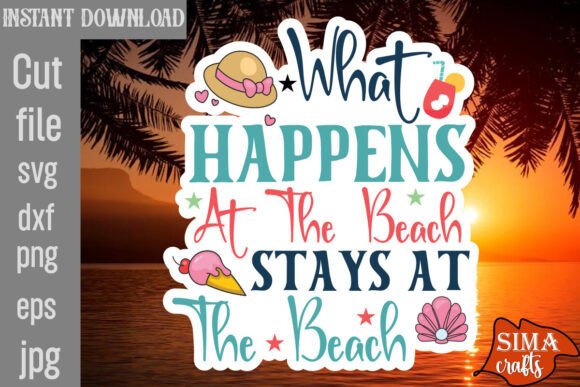
What Happens at the Beach Stays at the Beach Embroidery Review
As a designer who spends more time than I care to admit staring at stitch density charts and testing thread tension, I don’t just look at an embroidery design; I look at its potential in the real world. When What Happens at the Beach Stays at the Beach landed on my desk as part of a vibrant summer digital sticker collection, my first instinct wasn’t just to admire the colors—it was to ask: does this translate well to thread? Can it hold up on a tote bag that sees daily use? Will it look professional on a boutique sweatshirt?
This review breaks down how this machine embroidery design performs when moved from a screen to the hoop, offering practical insights for Etsy sellers, craft business owners, and hobbyists looking to create high-quality handmade products.
First Impressions and Visual Personality
The phrase "What Happens at the Beach Stays at the Beach" carries a specific mood: relaxed, fun, and slightly rebellious but lighthearted. In the context of Crafts and Graphics, this design leverages that energy through its layout and typography. The visual personality is bold and legible, which is crucial for embroidery where fine details can get lost in the fabric texture.
From a design standpoint, the composition feels balanced. It doesn’t feel cluttered, which allows the text to breathe. For a small business owner creating custom apparel or personalized gifts, this kind of clear, readable message is gold. It communicates a vibe instantly without requiring the customer to squint at intricate, tiny stitches. The color-filled nature of the original digital stickers suggests that when translated into thread, this design relies on strong contrast and saturation to pop, making it ideal for summer-themed merchandise.
Real-World Application: Where This Design Shines
I’ve tested similar designs across various mediums, and What Happens at the Beach Stays at the Beach finds its natural home in several key categories. Here is how I see it performing in actual production scenarios:
- Tote Bags and Market Bags: This is perhaps the strongest application. A canvas or cotton canvas tote embroidered with this phrase becomes an instant conversation starter. The durability required for a bag means the design needs to be sturdy, and the casual nature of the quote fits perfectly with the utilitarian aesthetic of a beach bag.
- Sweatshirts and Hoodies: Summer might be ending, but "beach season" mentalities last year-round. Placing this design on a heavyweight hoodie creates a cozy yet stylish piece. The contrast between soft fleece and crisp embroidery adds a premium feel to the finished product.
- Baby and Nursery Items: While the phrase has a slightly adult edge, it works beautifully for parents who want to keep their sense of humor. Imagine this on a burp cloth, a baby blanket, or a onesie. It serves as a memorable personalized gift for baby showers or summer arrivals.
- Kitchen Towels and Aprons: For the home cook who loves to entertain, this design adds a playful touch to kitchen textiles. It’s functional decor that reinforces a welcoming, relaxed host vibe.
- Embroidered Patches: If you are selling accessories, turning this into a patch for denim jackets or backpacks is a smart move. It allows customers to customize their own gear, increasing engagement and perceived value.
Technical Considerations and Potential Pitfalls
No design is perfect for every situation. As an experienced reviewer, I need to highlight where caution is necessary when working with What Happens at the Beach Stays at the Beach.
Fabric Choice Matters: This design will perform best on stable, woven fabrics like cotton, linen, or canvas. Avoid using it on highly textured fabrics like heavy bouclé or thin, stretchy knits without proper stabilization. On stretchy fabrics, the stitching may pucker, ruining the clean lines of the lettering. Similarly, on dark fabrics, ensure your thread choice provides enough contrast; otherwise, the design will disappear into the background.
Hoop Size and Detail Level: Always check the recommended hoop size before starting. If the design includes very fine script or tiny decorative accents, these elements might become muddy if stitched too small. I recommend scaling the design carefully and inspecting small details under good lighting. If the text becomes illegible due to shrinkage or tight spacing, it loses its impact entirely.
Density and Durability: For items that will undergo frequent washing, such as aprons or baby clothes, pay attention to the stitch density. Too much fill stitch in one area can make the fabric stiff and uncomfortable. Ensure the design uses a balance of satin stitch for outlines and efficient fill patterns to maintain flexibility and washability.
Stabilizer and Thread Selection
To achieve a professional finish, matching your stabilizer to the fabric is non-negotiable. A cut-away stabilizer is generally recommended for garments and bags that will be worn or used regularly, as it provides long-term support. For temporary projects like tea towels, a tear-away might suffice.
When selecting thread colors, think about the original graphic’s intent. Vibrant, saturated threads will bring out the "summer spirit" described in the product details. However, avoid overly shiny metallic threads for large text areas, as they can snag and wear quickly on high-friction items like tote handles.
Impact on Brand and Customer Trust
In the competitive world of Etsy listings and craft fair booths, presentation is everything. Using a well-executed design like What Happens at the Beach Stays at the Beach signals professionalism. Customers associate clean stitching and thoughtful placement with quality craftsmanship. When a buyer sees a neatly embroidered phrase on a high-quality tote, they are more likely to trust the brand and justify a higher price point.
Furthermore, this design enhances giftability. Personalized gifts often carry emotional weight. A sweatshirt or pillow cover featuring a relatable, fun quote becomes a keepsake rather than just a commodity. This emotional connection drives repeat business and positive reviews, which are vital for any small shop product.
Final Verdict for Designers and Sellers
Before incorporating What Happens at the Beach Stays at the Beach into your commercial embroidery workflow, take these final steps:
- Test on Scrap Fabric: Never go straight to the final product. Stitch the design on the exact fabric type you plan to sell.
- Check Licensing: Confirm whether the digital file includes commercial rights for selling finished physical goods. This varies by creator and must be verified to avoid legal issues.
- Create Mockups: Use printable mockups to visualize the design on different backgrounds. This helps you decide on thread colors and placement before committing to thread.
- Inspect the File: Open the SVG or DST file in your embroidery software to check for unnecessary jumps or trims that could complicate the stitching process.
Overall, this design is a strong asset for any creative entrepreneur looking to tap into the summer market or add a touch of coastal charm to their inventory. It balances readability, style, and versatility, making it a reliable choice for everything from personal hobbies to profitable craft business ventures. Just remember: great embroidery starts with careful planning, so test thoroughly and stitch with confidence.